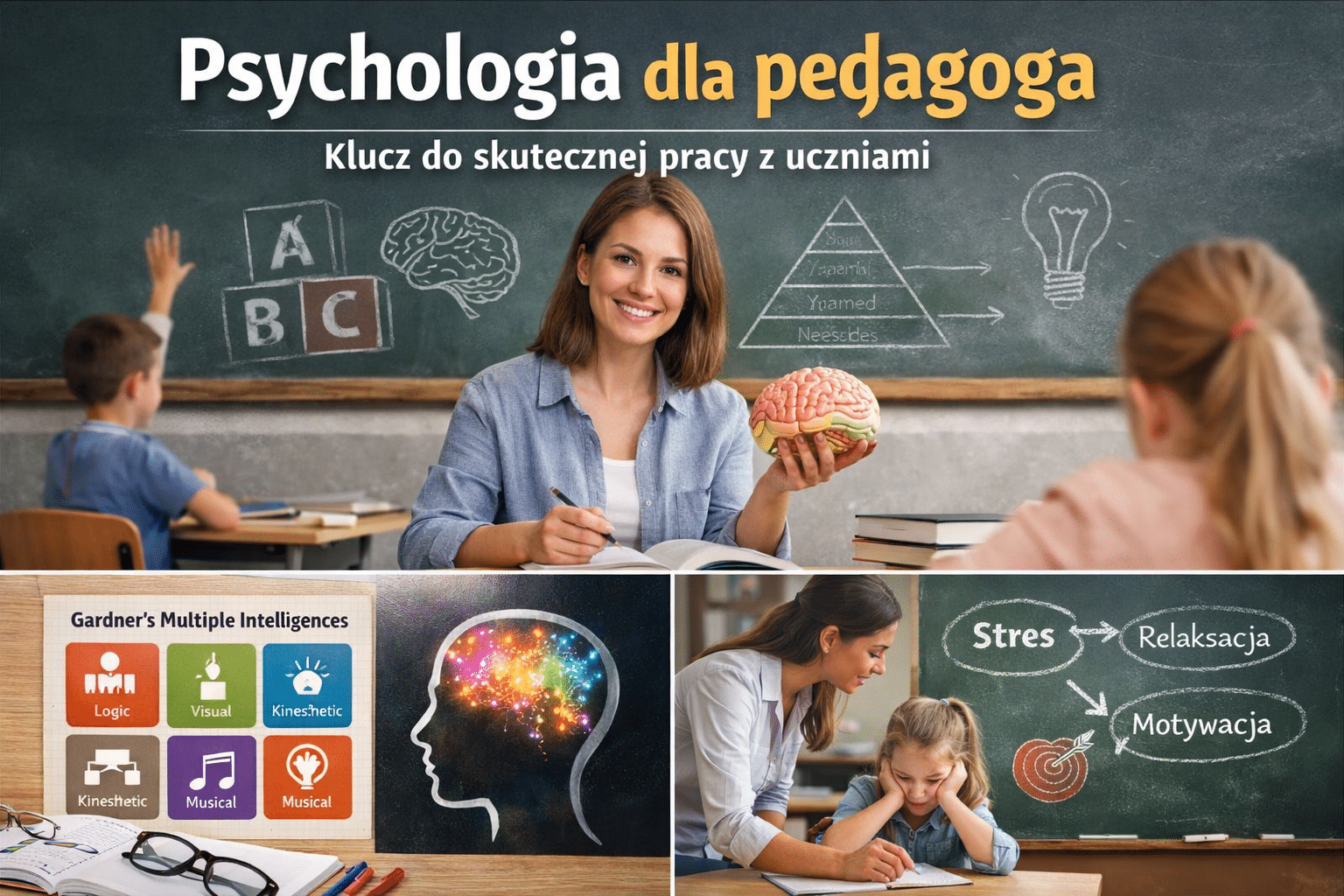
Psychology for educators is not a luxury today, but a necessity. As an educator, have you ever wondered why one student needs silence to concentrate, while another works best in a noisy environment? Or why some children "freeze up" before a test, even though they know the material perfectly? The answers to these questions lie in psychology for educators, a field of study that can revolutionize your work with students.
Psychology for educators: basic theories in education
In the traditional approach to teaching, we focus on imparting knowledge. Educational psychology goes a step further, helping us understand how the brain learns most effectively, why some methods work better than others, and what influences student motivation.
Contemporary neuropsychology shows us that learning is a complex process involving emotions, memory, attention, and executive functions. Research conducted by the University of Warsaw confirms that educators who understand these mechanisms can adapt their methods to the individual needs of each child.
How psychology for educators works in classroom practice
Howard Gardner's theory of multiple intelligences revolutionized the approach to individualized teaching. Some students are visual learners, others need movement, and still others remember best through sounds or rhythm. In practice, this means differentiating the methods of presenting material, offering alternative ways of expressing knowledge, and adjusting the pace to the student's abilities.
Research also shows that intrinsic motivation is much stronger than extrinsic motivation. Deci & Ryan's self-determination theory points to three basic needs: autonomy, competence, and relatedness. As an educator, you can give students choices in how they complete tasks, build a sense of efficacy through appropriately selected challenges, and create an atmosphere of support and safety.
Regulating emotions in the learning process is equally important. Stress blocks cognitive functions, while positive emotions support creativity and memory. Educators who are aware of these mechanisms can recognize signs of overload in students, use relaxation techniques in the classroom, and build positive learning experiences.
Psychology for educators: useful techniques from psychotherapy
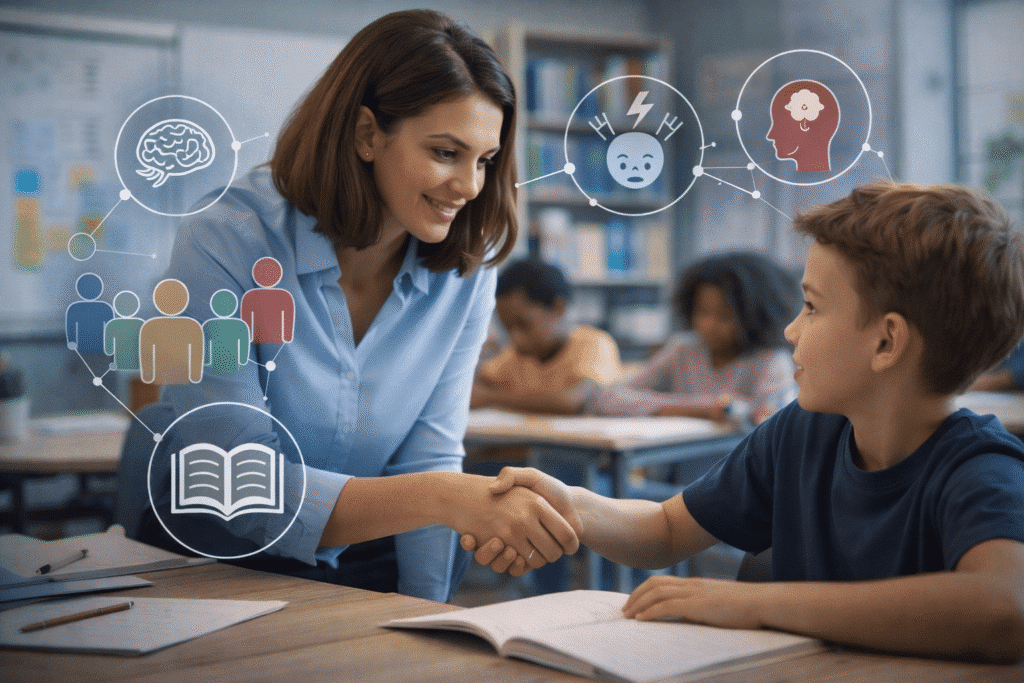
Although teachers are not therapists, knowledge of the basics of psychotherapy can be invaluable. Cognitive-behavioral therapy techniques help students cope with test anxiety. Elements of systemic therapy show how important the family and environmental context is.
Key psychotherapy skills for educators include active listening and relationship building, techniques for promoting self-awareness, understanding defense mechanisms, and working with resistance and motivation. These competencies enable educators not only to convey knowledge more effectively, but also to support their students' emotional development.
Developmental psychology: the key to understanding students
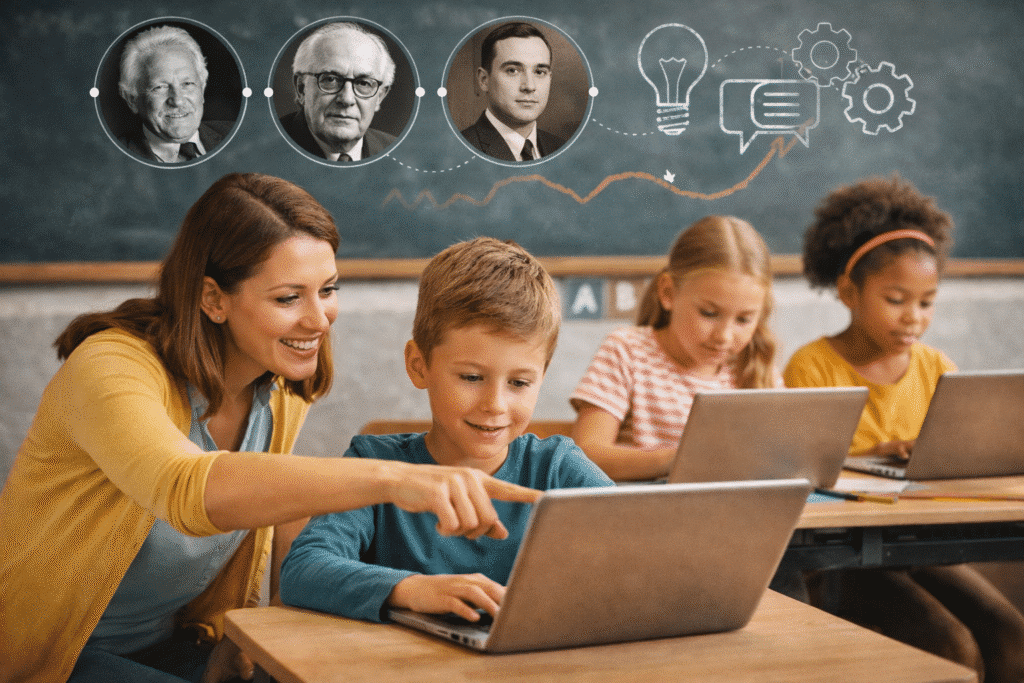
Erik Erikson, Jean Piaget, and Lev Vygotsky are names that every educator should know. Their theories show how a child's cognitive, emotional, and social development progresses. By knowing the stages of development, educators can adjust their expectations to developmental capabilities, recognize difficulties that may arise from immaturity, and support development at an appropriate pace.
The zone of proximal development, which shows the difference between what a child can do on their own and what they can learn with adult help, is particularly important. Understanding this concept allows educators to optimally adjust the level of difficulty of tasks and the type of support offered to students.
How to deepen your psychological knowledge?
Systematic education in psychology is an investment that brings long-term benefits. Online courses in educational psychology allow you to deepen your knowledge without giving up your professional career. The flexibility of online education means that you can learn at your own pace, adapting your studies to your daily responsibilities.
Reflective practice is equally important. Analyzing your own experiences in the classroom through the lens of psychology helps to integrate theory with practice. It is worth asking yourself questions such as: why did this method work with this student, what influenced the child's behavior in this situation, how can students with difficulties be better supported?
Interdisciplinary cooperation with school psychologists, therapists, and specialists from psychological and pedagogical counseling centers broadens perspectives and provides valuable tools. The Polish Psychological Association offers extensive educational resources and opportunities for professional networking. Such cooperation also allows for a better understanding of the limits of one's own role and when to refer a student to a specialist.
The future of education: psychology at the center
Contemporary education is increasingly focused on the development of social and emotional skills. The ability to cope with stress, cooperation, and empathy are skills that are just as important as subject knowledge. Educators equipped with psychological knowledge become not only teachers, but mentors who support the holistic development of young people.
This approach benefits both students and teachers, increasing job satisfaction. Classrooms become a space not only for imparting knowledge, but also for personal development, relationship building, and character formation.
The first step towards change
Every journey begins with a first step. When it comes to deepening your psychological knowledge, that step could be consciously applying one new technique in the classroom, reading a scientific article, or signing up for an online course.
Psychology is not an abstract theory; it is a practical tool that can transform your work with students and make it more effective, satisfying, and meaningful. Investing in the development of psychological competencies is an investment in better education for everyone.
If you found this article helpful, please share it with other educators. The Ministry of Education and Science also promotes an interdisciplinary approach to education. We all deserve to have work that is not only effective but also inspiring, both for us and our students.
Would you like to deepen your knowledge of educational psychology? Check out our online courses, which combine the latest scientific advances with practical tools for today's educators mindspace-edu.com