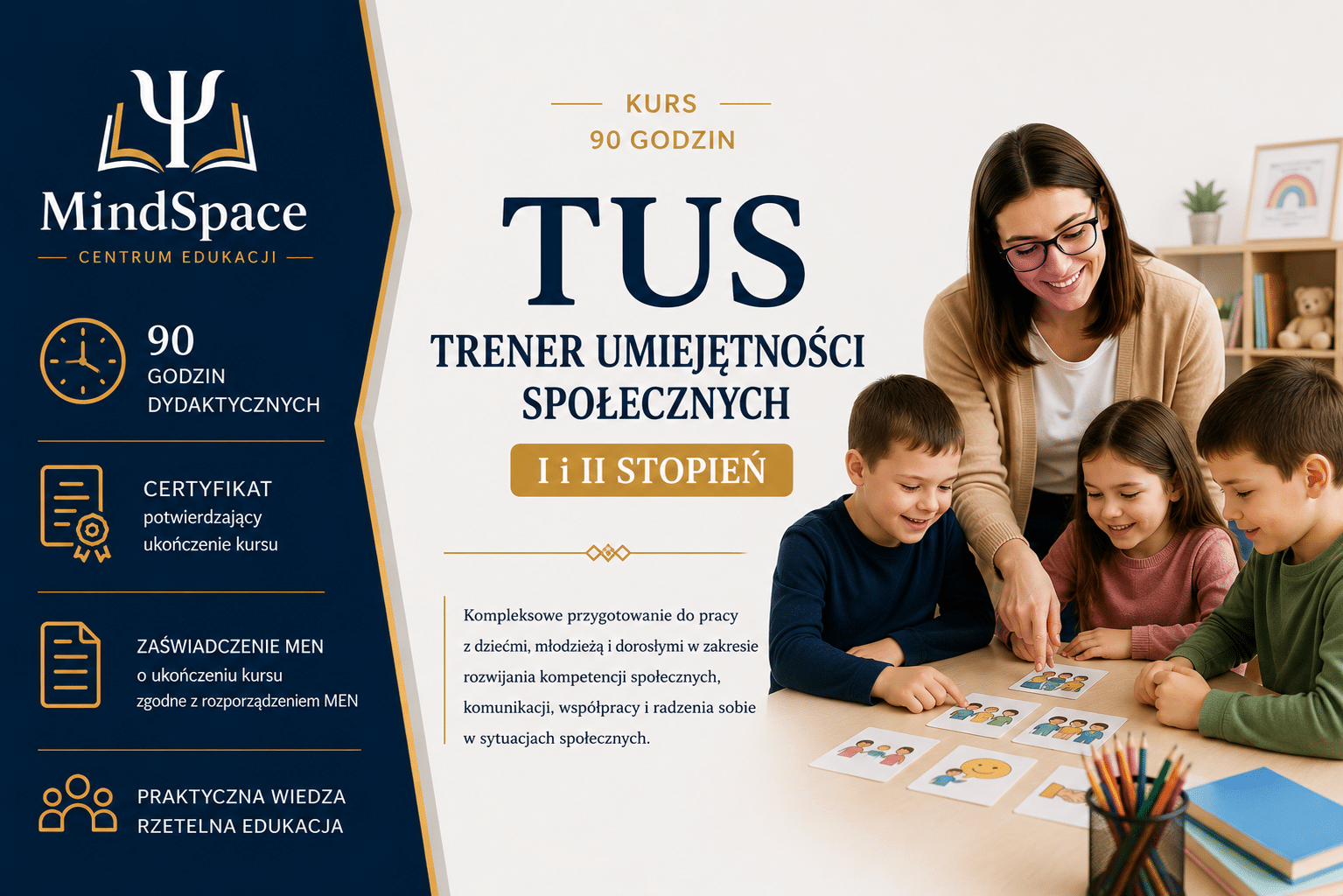
TUS – Social Skills Trainer Level I and II
About the course
Social Skills Training (SST) is a systematic and empirically grounded educational method aimed at developing participants' interpersonal, communication, and emotional skills. It is a structured learning process based on the principles of social psychology, pedagogy, and social learning theory, focused on developing adaptive patterns of social behavior.
The basic assumption of this methodology is the belief that social skills are acquired through systematic learning and can be effectively developed through appropriate educational interventions. The program covers a wide range of social skills, including verbal and nonverbal communication, assertiveness, cooperation, conflict resolution, emotion regulation, and building positive interpersonal relationships.
This approach is distinguished by its structured organization of the learning process, use of experiential techniques, systematic reinforcement of acquired skills, and comprehensive evaluation of participants' progress in controlled and natural conditions.
Po ukończeniu programu uczestnik otrzymuje imienny certyfikat oraz suplement opisowy dokumentujący zakres tematyczny, osiągnięte efekty uczenia się oraz liczbę godzin pracy własnej uczestnika. Suplement sporządzono zgodnie z europejskimi standardami opisu efektów uczenia się i może stanowić dokument wspierający proces potwierdzania osiągniętych kompetencji oraz ich uwzględniania w procedurach uznawania efektów uczenia się zgodnie z zasadami obowiązującymi w danej uczelni lub instytucji.
Course content
Module I Conceptualization of social skills training – level I
-
Recommended reading
-
Cele modułu – Efekty kształcenia po ukończeniu modułu
-
Podstawowe założenia metodyczne Treningu Umiejętności Społecznych
-
Rola kompetencji społecznych w rozwoju i funkcjonowaniu psychospołecznym jednostki
-
Rozwój kompetencji społecznych w dzieciństwie i adolescencji
-
Neurobiological mechanisms of social competence development
-
Geneza i ewolucja założeń teoretycznych oraz metodycznych Treningu Umiejętności Społecznych
-
Theoretical foundations of the TUS methodology
-
Indywidualizacja celów i proces grupowy w Treningu Umiejętności Społecznych
-
Metody badawcze i pomiar efektów Treningu Umiejętności Społecznych
-
Wskazania, przeciwwskazania i kryteria kwalifikacji do Treningu Umiejętności Społecznych
-
Interdisciplinary cooperation – working with psychiatrists, educators, and parents
-
Prawne i Etyczne uwarunkowania pracy w TUS
-
Metody oceny i monitorowania efektów Treningu Umiejętności Społecznych
-
Materiał Filmowy
12:00 a.m. -
Zadanie do materiału filmowego
-
Assess the truthfulness of the following statements by selecting True or False.
-
Printable material
Module II Professional competencies of a TUS specialist in working with children and young people
Module III Recognizing difficulties in TUS in children and adolescents
Module IV Methodology of organizing social skills training for children and adolescents
Moduł V Stopień II – Zaawansowane Techniki TUS
Moduł VI Specyfika pracy w rozwoju umiejętności społecznych
Course completion – Certification
Student ratings and reviews