Psychologia Przemocy od Ofiary do Sprawcy
About the course
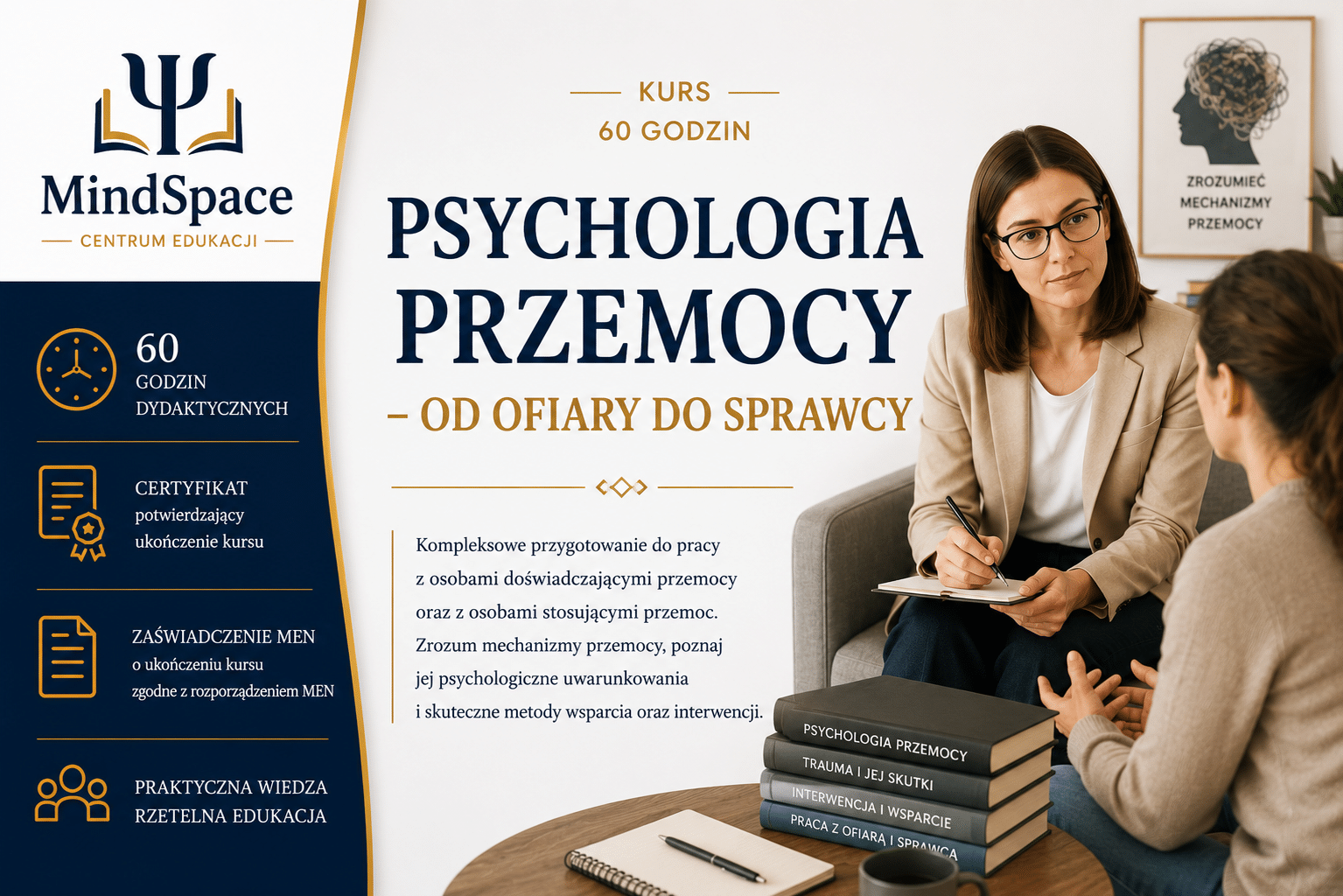
Kurs „Psychologia Przemocy Od Ofiary do Sprawcy” jest programem psychoedukacyjnym poszerzającym wiedzę w obszarze mechanizmów przemocy, jej psychologicznych uwarunkowań oraz skutków dla jednostki i społeczeństwa. Kurs nie nadaje kwalifikacji zawodowych ani uprawnień terapeutycznych jego celem jest pogłębienie rozumienia zjawiska przemocy z perspektywy psychologii, relacji interpersonalnych i zdrowia psychicznego.
The aim of the course is to present the complexity of violence, from the role of the victim to the mechanisms of the perpetrator, and to develop psychological awareness of the emotional, cognitive, and social processes accompanying these experiences.
Participants will learn the theoretical foundations of the dynamics of violence, as well as ways of responding and preventing it in professional, educational, and personal contexts.
Po ukończeniu programu uczestnik otrzymuje imienny certyfikat oraz suplement opisowy dokumentujący zakres tematyczny, osiągnięte efekty uczenia się oraz liczbę godzin pracy własnej uczestnika. Suplement sporządzono zgodnie z europejskimi standardami opisu efektów uczenia się i może stanowić dokument wspierający proces potwierdzania osiągniętych kompetencji oraz ich uwzględniania w procedurach uznawania efektów uczenia się zgodnie z zasadami obowiązującymi w danej uczelni lub instytucji.
Course content
Module I – Introduction to the psychology of violence
-
Definicje i typologie przemocy – ujęcie psychologiczne i społeczne
-
Mechanizmy psychologiczne przemocy od impulsu do utrwalonego wzorca
-
Psychologiczny profil ofiary przemocy – emocje, tożsamość i proces adaptacji
-
Psychologiczny profil sprawcy przemocy – źródła, motywacje i mechanizmy kontroli
-
Dynamika relacji ofiara–sprawca – psychologiczna współzależność i więź traumatyczna
-
Proces wychodzenia z przemocy – etapy, wsparcie i odbudowa psychiczna
-
Case Study 1. – Psychological abuse in a relationship
-
Case Study 2 – Psychological mechanisms of violence: from impulse to established pattern
-
Case Study 3 – Psychological profile of a victim of violence: emotions, identity, and the adaptation process
-
Case Study 4 – Profile of the perpetrator of violence: sources, motivations, and control mechanisms
-
Case Study 5 – The dynamics of the victim-perpetrator relationship and the traumatic bond
-
Case Study 6 – Violence against children and intergenerational transmission
-
Final test – Module I: Psychology of psychological violence
Module II – Psychological underpinnings of violence and the process of internalizing aggression
Module III: The psychology of perpetrators of violence
MODUŁ IV – Przemoc w systemach rodzinnych i instytucionalnych
Module V – Cycle of Violence
Module VI – Prevention and psychological intervention in the area of violence
Violence takes away your voice. A professional restores it with awareness, empathy, and courage.
Course completion – certification
Student ratings and reviews