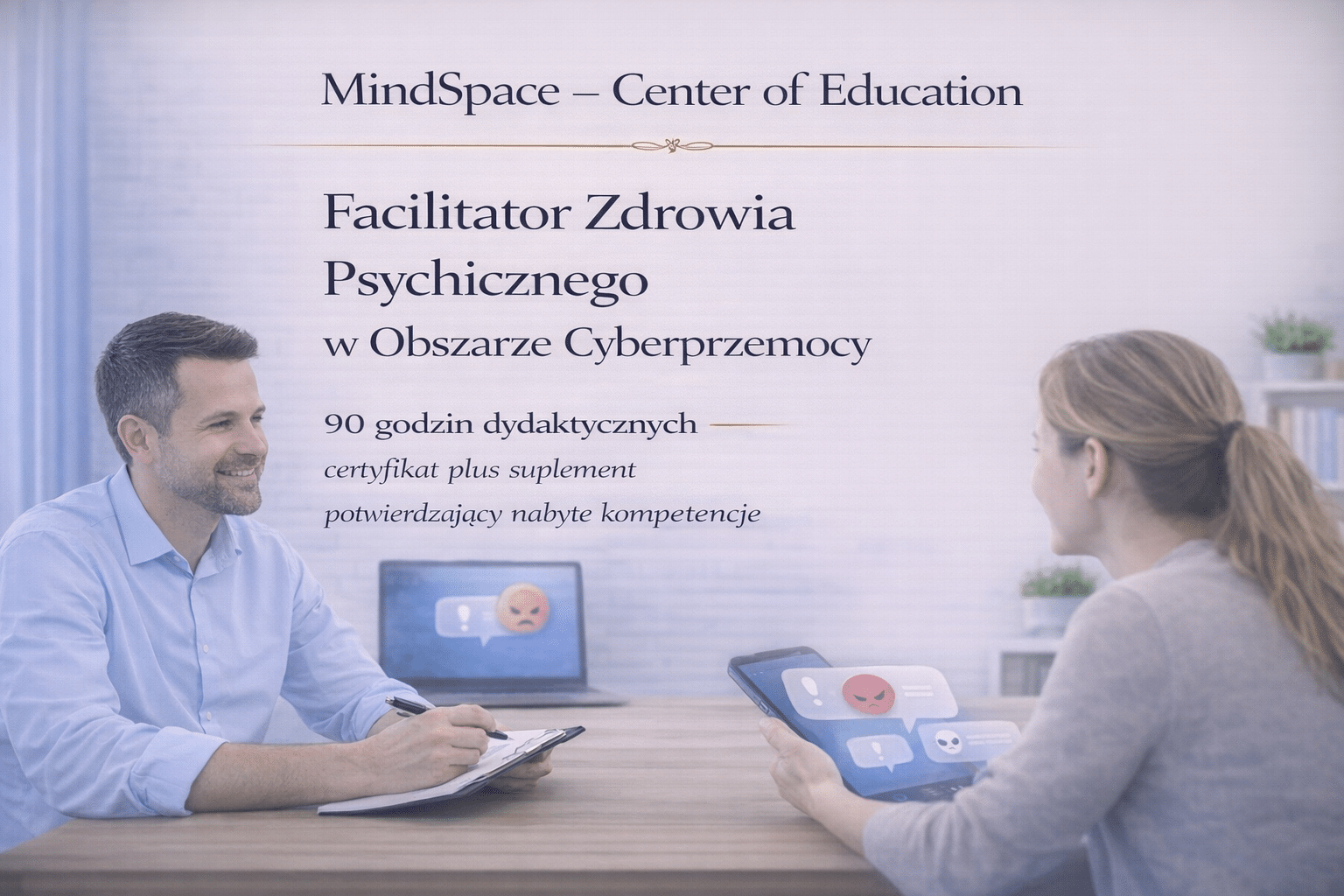
Mental Health Facilitator in the Area of Cyberbullying
About the course
The "Mental Health Facilitator in the Area of Cyberbullying" program prepares participants to professionally provide initial support to people experiencing cyberbullying, recognize its psychological effects, and organize intervention and prevention activities in the local community.
The facilitator does not act as a therapist, but functions as a competent assistant and support coordinator who has the ability to recognize symptoms of mental health difficulties, provide initial psychological support, organize assistance in crisis situations, and professionally refer individuals to appropriate mental health specialists.
Upon completion of the program, participants receive a personalized certificate and a descriptive supplement documenting the program's subject matter, learning outcomes achieved, and the number of hours of independent study completed by the participant. The supplement is prepared in accordance with European standards for the description of learning outcomes and contains information used in ECTS credit recognition procedures.
Course content
Introduction to the course
-
Important information about Facilitator – introduction
-
Module I Introduction to cyberbullying
-
Definition and characteristics of cyberbullying
-
Case study: Verbal hate speech
-
Spreading false information (cyber defamation)
-
Case study: Impersonation and online reputation defamation
-
Publishing compromising material
-
Case study: Revenge porn – sextortion and distribution of intimate material
-
Legal aspects of cyberbullying
-
Procedure for reporting cyberbullying to law enforcement authorities
-
Procedures for reporting cyberbullying on online platforms
-
Social exclusion in the digital space – online ostracism
-
Case study: Cyberbullying in the school environment
-
Cyberstalking – persistent harassment in the digital space
-
Case study: Cyberstalking as a continuation of intimate partner violence
-
Cyberbullying Assessment Scale (CAS) – description of the tool
-
Psychological mechanisms of cyberbullying – theoretical foundations for facilitator practice
-
The neurobiology of trolling
-
Mechanisms of trolling addiction and long-term consequences for perpetrators
-
The multidimensional consequences of cyberbullying for victims
-
The bio-psycho-social model of cyberbullying impact
-
Neurobiological and somatic consequences of cyberbullying
12:00 a.m. -
Digital PTSD – A new diagnostic unit
-
Adaptation of DSM-5 diagnostic criteria to digital trauma
-
Digital PTSD Specifications
-
Epidemiology of mental disorders in the context of cyberbullying
-
Resilience mechanisms and protective factors
-
Practical implications for Facilitator
-
Psychological first aid in the context of cyberbullying
-
Assessing suicide risk in cyberbullying
-
Why cyberbullying is so dangerous
-
When to see a specialist immediately
-
Recognizing signs of suicide risk
-
The Role of the Facilitator
-
Supportive communication
-
Conclusions – violence
-
Recommended reading
-
Work Cards
-
Emergency contacts
-
Select the correct answer
-
Task for analysis
12:00 a.m. -
Task for the film